REVIEW · OLD TOWN & CASTLE HILL TOURS
Nice walking tour: Old City and Castle Hill
Book on Viator →Operated by Mobilboard Nice · Bookable on Viator
Nice has a way of pulling you along. This 90-minute walk turns key Old Nice spots into a clear, human-scale route with photo stops and a food-market moment. I especially love how it strings together iconic Promenade landmarks and the old-town corners without feeling rushed. I also like that the tour ends right near Cours Saleya, so you can keep exploring or snack your way through the area. One thing to consider: it’s a public group, so if your guide is balancing languages, you may hear a bit of bilingual back-and-forth.
Expect a smooth mix of big-name scenery and local details: La Chaise Bleue along the waterline, Neuf Lignes Obliques as a wink at Nice’s changing political story, and a small Statue of Liberty with a real origin story behind it. Then you move inland toward Place Rossetti, St. Réparate’s Cathedral (yes, a bar is inside), and a viewpoint near Castle Hill where #ilovenice frames the Bay of Angels. The vibe is practical, and guides such as Elena, Tessa, Francisco, Nicholas, and Helena are often praised for pacing and answering questions—exactly what you want in a short walking tour.
In This Review
- Quick hits: what makes this walk so worth it
- Getting Oriented on the Promenade des Anglais in Just 90 Minutes
- La Chaise Bleue and Neuf Lignes Obliques: two landmarks that tell you what Nice does best
- The Statue of Liberty in Nice: why the small one is the interesting one
- Old-style British winter cottages: when architecture whispers a migration story
- Cours Saleya Market: the food stop that makes the whole tour taste better
- Palais de la Préfecture: seeing the old power center without the heavy museum load
- Place Rossetti and the art of slow looking: trompe-l’œil, ice cream, and a cathedral stop
- #ilovenice and Bay of Angels: the viewpoint that feels like a reward
- Price and value: what $42.05 really buys you
- Who this tour is best for (and who should skip it)
- A practical tip: how to get the most out of the stops
- Should you book this Old City and Castle Hill walk?
- FAQ
- How long is the Nice Old City and Castle Hill walking tour?
- Where does the tour start and where does it end?
- Is the tour offered in English?
- How large is the group?
- Is there a food stop included around Cours Saleya?
- Can I get a full refund if I cancel?
Quick hits: what makes this walk so worth it
- Promenade shortcuts: You cover the famous waterfront landmarks fast, with context that makes photos more fun.
- Nice history in public art: Neuf Lignes Obliques is a modern marker tied to the city’s France story.
- A small Liberty with big lineage: Nice’s Statue of Liberty traces back to Bartholdi training statues.
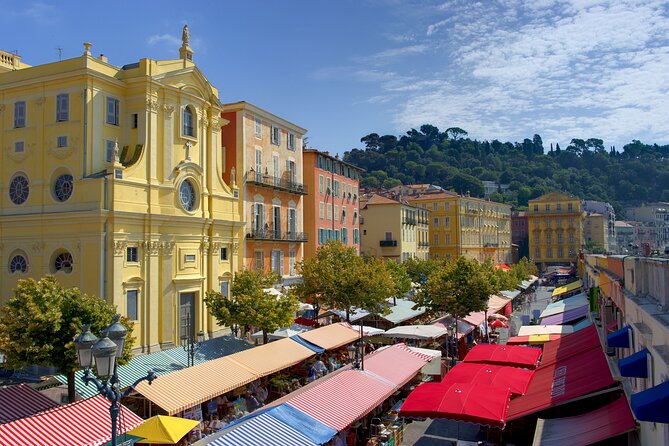
- Cours Saleya food stop: You’ll get a chance to try local favorites like socca and other market bites.
- Old Nice shapes and illusions: Place Rossetti’s trompe-l’œil details reward slow looking.
- Bay of Angels viewpoints: #ilovenice is a quick win for skyline and sea photos from the Castle Hill area.
Getting Oriented on the Promenade des Anglais in Just 90 Minutes
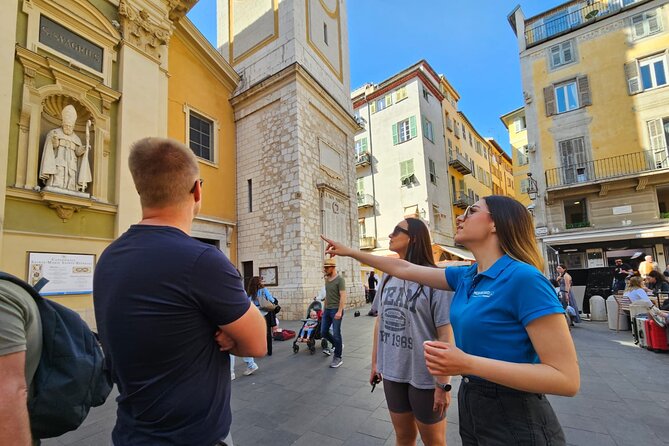
The hardest part of Nice for many first-timers is simple: it’s beautiful, but it’s spread out. This walk solves that by starting on the Promenade area—where you can get your bearings quickly and still feel like you’re doing something real, not just passing by statues.
You’ll move at a comfortable pace for about an hour and a half, with a small group capped at 15 people. That matters more than it sounds. In a bigger group, questions get swallowed. In this size, you can actually ask why something is there, or what you’re looking at before you move on.
There’s also something smart about the flow: you start with sea-level landmarks, then gradually rise into Old Nice streets and viewpoints. It keeps your legs busy in a good way, and it makes the later Castle Hill view feel earned instead of random.
You can also read our reviews of more walking tours in Nice

La Chaise Bleue and Neuf Lignes Obliques: two landmarks that tell you what Nice does best
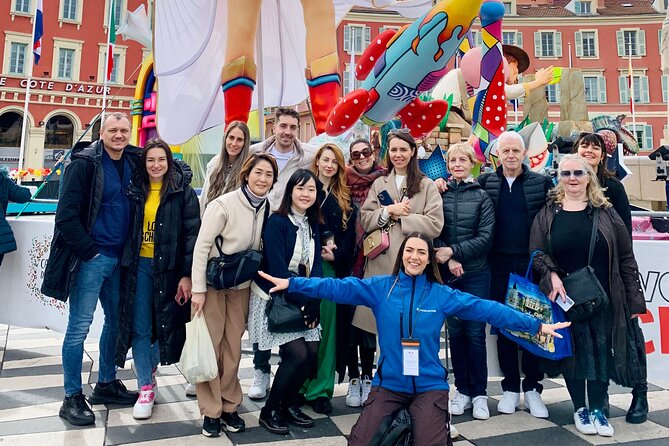
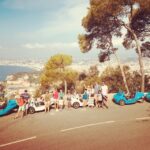
The first big stop is La Chaise Bleue de SAB, the famous blue chair motif. It’s one of those Nice things you’ve probably seen on postcards, but here it’s more than branding. The guide talk usually connects it to the idea of Nice as a visual identity—where even everyday objects become part of the city’s signature look.
Then comes Neuf Lignes Obliques. This is public art that reads like a city-time stamp. It was installed on the Promenade in 2010 to mark the 150th anniversary of Nice’s attachment to France—a reminder that Nice’s story isn’t one-note. When you know that, you look at the structure differently. You’re not just admiring an arrangement of lines; you’re seeing a political and historical marker turned into something you can stroll past.
If you like learning that’s short, specific, and directly tied to what’s in front of you, these two stops are a great opening act.
The Statue of Liberty in Nice: why the small one is the interesting one
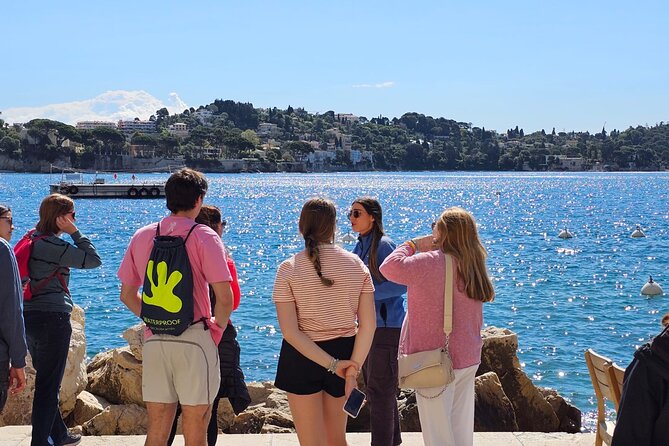
After the blue chair and the lines, you’ll hit the Statue of Liberty—yes, the one in Nice. It’s smaller than the New York version, and that’s exactly why it’s worth your attention.
The key detail is the origin story: after New York, Paris, Colmar, and Tokyo, Nice got its own Statue of Liberty in 2014. It traces back to the training statues of Frédéric-Auguste Bartholdi, the sculptor behind the famous New York statue. So even if you only catch glimpses as you walk, you get a meaningful takeaway: this city didn’t just copy a symbol. It inherited a sculptor’s broader system of models and training work.
That’s how this tour keeps things interesting: it turns “I’ve seen this idea before” into “Oh, there’s a reason it landed here.”
Old-style British winter cottages: when architecture whispers a migration story
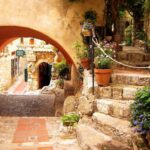
One of the more charming parts of this walk is moving through streets tied to British winter visitors. You’ll pass typical one-storey cottages with roof terraces, a style that fits the idea of people coming to Nice to live in the winter season long before modern tourism. It’s not a museum moment. It’s more like the neighborhood itself is showing you old habits.
This kind of stop is valuable because it slows your thinking down. Instead of only chasing monuments, you start noticing how people actually lived: how buildings were shaped, how terraces worked, and how the city absorbed visitors.
It’s also a nice switch after the Promenade. You go from open-air, sea-facing landmarks to a more human, street-level vibe.
Cours Saleya Market: the food stop that makes the whole tour taste better
Cours Saleya is one of the best places in Nice to connect sightseeing with eating. The market there is known for its history as an early flower market, but today it’s firmly a working marketplace with local energy.
This is where the tour turns practical. You’ll get the chance to try local favorites like socca, pissaladière, and pan bagnat. If you’re the type who normally walks past food stalls because you don’t know what to choose, this is a relief. Having a guided recommendation means you can sample without guessing.
Also, ending up around Cours Saleya later is handy. Even if you’re not trying more food, you can easily continue at your own pace—coffee, pastries, produce, or just people-watching.
If you’re wondering whether $42.05 for 1.5 hours is worth it, the answer often depends on this stop. When food is part of the experience (and it is), the tour becomes more than a photo walk.
You can also read our reviews of more city tours in Nice






Palais de la Préfecture: seeing the old power center without the heavy museum load
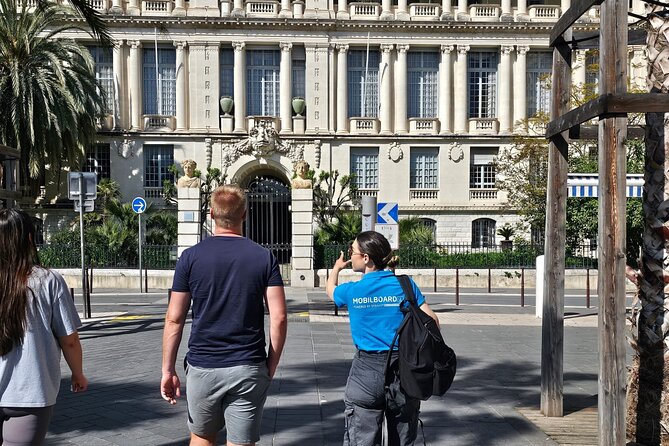
From the market area, you’ll swing toward the Palais de la Préfecture. The building is now a government space, but it used to be the residence of Nice’s former lords. That kind of transformation is common across European cities: power moves, buildings stay.
What’s useful here is the contrast. You’re not just admiring architecture. You’re reading the city’s layers. Streets and views are one thing, but institutions show you how the city organized itself.
This stop is short, but it gives you a quick anchor: you’ve moved from daily-life Nice (market) into the administrative and historical core.
Place Rossetti and the art of slow looking: trompe-l’œil, ice cream, and a cathedral stop
Place Rossetti is the heart of Old Nice, and it works because it’s visually busy in a good way. You’ll encounter trompe-l’œil—painted illusions designed to fool your eye. The point isn’t just tricking you. It’s showing how Old Nice used walls and facades as story space.
There’s also an ice-cream moment in the same area. The tour route is built so you pass by it at a natural pause point, which is exactly when you want a sweet break.
Then you’ll reach St. Réparate’s Cathedral, a church tied to Piedmontese Baroque. What makes it memorable is the detail that there’s a bar inside. It’s the kind of fact that gets people to lean in, because it doesn’t fit your normal expectations of a cathedral space.
Even if you don’t linger long, the stop helps you understand why Old Nice feels different. It’s not just old stones. It’s old functions repurposed and mixed with modern city life.
#ilovenice and Bay of Angels: the viewpoint that feels like a reward
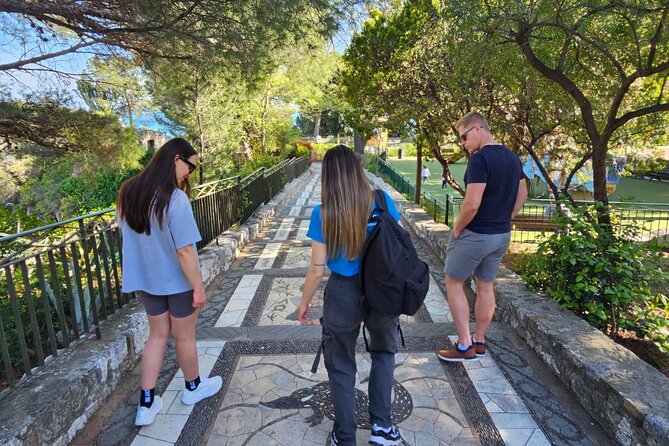
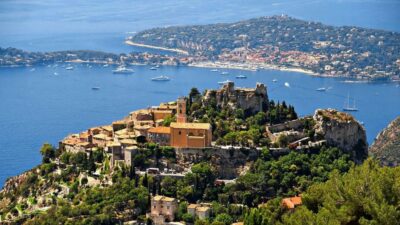
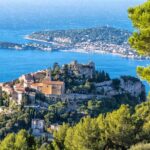
As you work your way toward Castle Hill territory, you end at a spot known for #ilovenice views. This is your final payoff: overlooking the Bay of Angels.
In a short tour, a good viewpoint matters because it turns the walking into a story you remember. You feel the change from sea-level landmarks up toward the old city. Then you get a wide view that makes the whole route click.
Even if you’re not a big photo person, this is where you can take a breath, check your surroundings, and understand how Nice sits along the water.
Price and value: what $42.05 really buys you
At $42.05 per person for about 1 hour 30 minutes, the price isn’t a steal. It’s also not inflated if you use the tour the way it’s meant to be used: as a guided route that packs multiple iconic stops plus food.
Here’s what you get for the money:
- A tight route that covers key landmarks without turning into a marathon
- A guide who can connect monuments to real context (you’ll hear history tied to what you see)
- A food-market stop where local bites are part of the experience
- A small group size, so you’re not just following a crowd
Also, the fact that it’s often booked around a month in advance is a practical nudge. Nice is popular, and short tours fill up. If your timing is fixed, book ahead and don’t wait for luck.
Who this tour is best for (and who should skip it)
This is ideal if:
- You want a fast orientation to Nice’s key neighborhoods
- You like history that’s tied to visible landmarks
- You want a food stop that reduces the stress of choosing
- You’d rather ask questions than wander in circles
It may not be ideal if:
- You prefer private, no-language-mixing tours and want a single-language experience at every sentence
- You hate walking and want zero uphill or city-street movement (this is manageable, but it is still a real walking route)
A practical tip: how to get the most out of the stops
Bring shoes you don’t mind walking in for 90 minutes. Then, when you hit a landmark like Neuf Lignes Obliques or the Statue of Liberty story, pause for a moment and listen. The best value comes when you trade five seconds of scrolling for a real detail.
Also, at the market stop, go with the guide’s suggestions. That way, you don’t over-order or miss a local classic.
Should you book this Old City and Castle Hill walk?
If you want a guided highlight reel that still feels local, this is a strong choice. You get the Promenade landmarks, the old-town squares, the weirdly wonderful cathedral detail, and a viewpoint that makes the walk feel like a payoff.
My rule of thumb: book it if you’re staying in or near Old Nice and you want a plan for your first day (or your only morning). Skip it if you already know Nice well or you only want museum-grade depth. For most people, this hits the sweet spot: short, specific, and genuinely useful—with market food in the middle.
FAQ
How long is the Nice Old City and Castle Hill walking tour?
It runs for about 1 hour 30 minutes.
Where does the tour start and where does it end?
It starts at Mobilboard Nice on Rue Halévy (2 Rue Halévy, 06000 Nice) and ends at Cours Saleya (Cr Saleya, 06300 Nice).
Is the tour offered in English?
Yes, it’s offered in English.
How large is the group?
The tour has a maximum of 15 travelers.
Is there a food stop included around Cours Saleya?
You’ll have a market stop at Cours Saleya, and the experience is described as a place to try local products like socca, pissaladière, and pan bagnat. Some guides also include free local tastings during the tour.
Can I get a full refund if I cancel?
Yes. You can cancel up to 24 hours in advance for a full refund. If you cancel less than 24 hours before the start time, the amount paid is not refunded.