REVIEW · EZE
Èze: Walking Tour with a Local Guide
Book on GetYourGuide →Operated by Esplouratour · Bookable on GetYourGuide
Medieval Èze turns clearer with a local guide. You get a French ministry of culture–certified guide and a focused walk through the old village, finishing with the Exotic Garden views of the French Riviera.
I especially like two things: the way a guide (like Gianni, when he’s leading) connects village details to the wider Nice–Èze region, and the Exotic Garden stop where you’ll see 100+ species of succulent plants and cacti plus sculptural details that you’d miss on your own.
One heads-up: you’ll tackle many stairs, and this tour is not suitable for wheelchair users. If stairs are a concern, you may want a slower plan or a different format.
In This Review
- Key things you’ll notice on this Èze walk
- Why Èze feels special on foot (and with a local guide)
- Where the tour starts: Place du Centenaire and getting oriented fast
- Stop at the village viewpoints: passes, arcades, and flowered facades
- The fortified gate and medieval castle ruins: history you can see
- Chapels and church details: Notre-Dame de l’Assomption and Sainte-Croix
- Le Jardin Exotique: 100+ succulents and the sea-and-mountain payoff
- Fragonard factory stop: perfumes and soaps with a quick behind-the-scenes taste
- How the small group format actually helps your day
- Timing and endurance: 1.5 hours that still feel like something
- Value for $34: why the price feels fair for what you get
- Should you book this Èze walking tour?
- FAQ
- How long is the Èze walking tour?
- Where do I meet the guide?
- What does the tour include?
- Is the tour rain or shine?
- What languages are available?
- Is this tour wheelchair accessible?
Key things you’ll notice on this Èze walk
- Certified-by-the-ministry guide giving you context for what you’re seeing, not just a route.
- Fortified 14th-century entrance that sets the tone the moment you arrive at old Èze.
- Garden ticket included so you can get into Le Jardin Exotique with less hassle.
- Big panorama time from the top of the garden, with sea and mountain views.
- Church + chapel stops including Notre-Dame de l’Assomption and Chapelle Sainte-Croix.
- Fragonard factory visit for a quick look at perfumes, soaps, and cosmetics from a famous name.
Why Èze feels special on foot (and with a local guide)

Èze is one of those Provence-to-French-Riviera villages that looks like it belongs in an old painting. It’s perched on a rocky spur, so the streets feel dramatic—tight lanes, stone buildings, and sudden glimpses outward when you turn a corner. Walking it with a guide helps you understand what you’re looking at and why it mattered when the village was built for defense.
I like tours that don’t just rush from photo spot to photo spot. This one keeps you moving through the heart of the medieval village—chapels, arcades, fountains, vaulted passages, and craft storefronts—so the village feels like a place, not a checklist. And the guide’s role matters most at the spots where the story behind the stones adds real meaning.
The practical payoff is speed and sense. The Exotic Garden is a must, but it’s also the point where lines and crowds can ruin your pace. With included entry and a guide to manage the flow, your time stays enjoyable rather than stressful.
You can also read our reviews of more tours and experiences in Eze.



Where the tour starts: Place du Centenaire and getting oriented fast
You meet at Place du Centenaire, and it’s described as the only entrance to the village of Èze. That detail is more useful than it sounds. It means you’re not guessing your way into the old quarter or wandering around the edges while everyone else is already inside the medieval core.
From the start, you’re set up to go in the right direction and build momentum. You’ll cross the fortified gate into old Èze, and that first threshold—dating from the 14th century—gives you the context for the rest of the walk. Instead of seeing walls as just pretty stone, you start noticing how defense shaped the layout.
If you arrive early, take a minute to look upward from the square. Èze is a village that rewards that habit. The best views come when you understand the terrain.
Stop at the village viewpoints: passes, arcades, and flowered facades
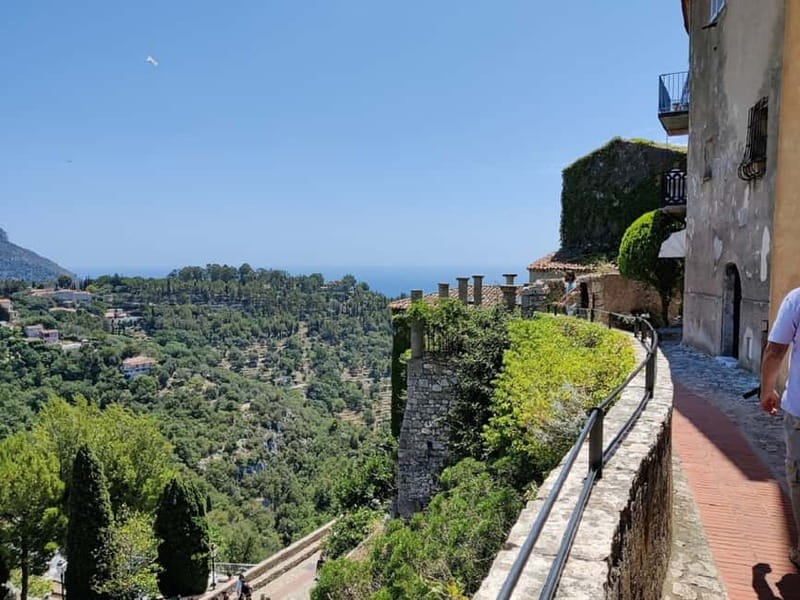
As you walk, you’ll move through narrow winding streets lined with stone houses, craft shops, and art galleries. One of the joys of Èze is that the village isn’t only medieval walls and ruins. You’ll also see flowered facades and small-town details like fountains and sheltered arcades.
Those are the moments where a guide really helps. You’ll get a sense of what the design choices mean—why certain passages feel vaulted, why some buildings hug the slope, and why the village has that Provencal character that people keep returning for. Without context, you might enjoy it. With context, you start recognizing patterns.
Expect plenty of walking and some steep sections. The tour is listed as rain or shine, so wear shoes that can handle uneven stone and tight turns.
The fortified gate and medieval castle ruins: history you can see
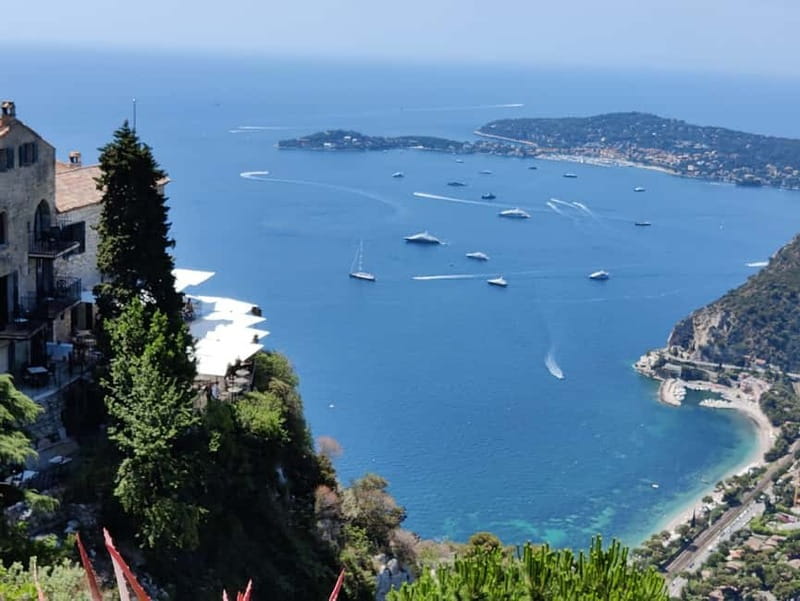
The fortified gate isn’t just an opening into the village—it’s the first clue that Èze was built for survival. Once you’re through, you’ll also have a chance to admire the ruins of the medieval castle, which are part of what testifies to Èze’s turbulent past.
This is where the guide’s certified background pays off. You’re not only hearing dates; you’re getting explanations tied to the geography. Because Èze sits above the coast, the views aren’t only scenic—they’re strategic. That makes the ruins feel more meaningful as you look out over what once needed defending.
If you like photos, plan to pause without guilt. The ruins and fortification areas are where the village’s scale becomes clear.
Chapels and church details: Notre-Dame de l’Assomption and Sainte-Croix
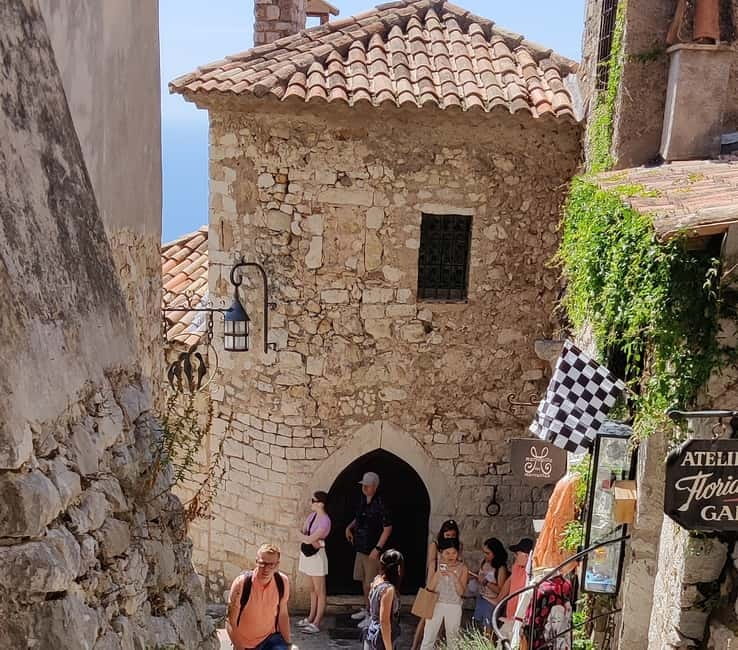
A major highlight is the stop at Chapelle Sainte-Croix, des Pénitents blancs. Even if you’re not a church-history person, chapels in small medieval villages often tell you about community identity—who gathered, what symbols mattered, and how religious life fit into everyday life.
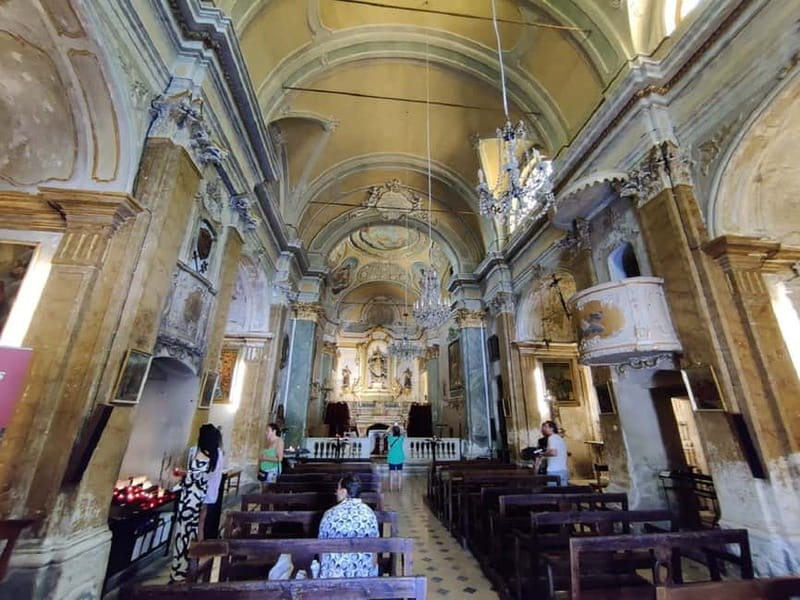
Then comes Église Notre-Dame-de-l’Assomption, which you’ll recognize for its ochre facade and bell tower with a clock. The exterior is memorable, but the interior adds another layer. You can visit inside to see an 18th-century altarpiece and a 19th-century organ.
This is also a good moment to slow down and watch how your guide handles the space. In places like this, there’s a respectful rhythm—time for a glance, then time to listen. A small group helps here; you won’t constantly be shuffling around people who don’t have the same pace.



Le Jardin Exotique: 100+ succulents and the sea-and-mountain payoff
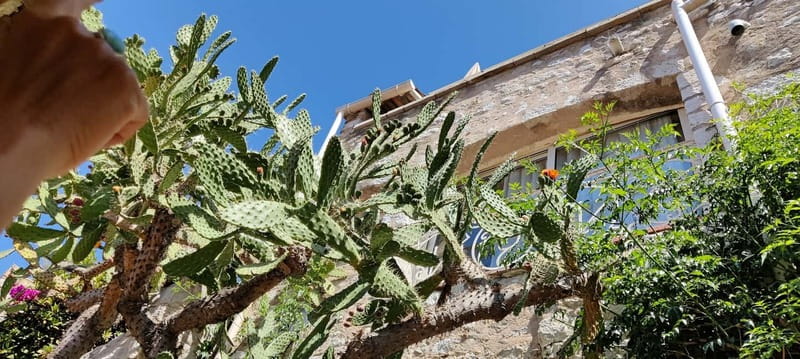
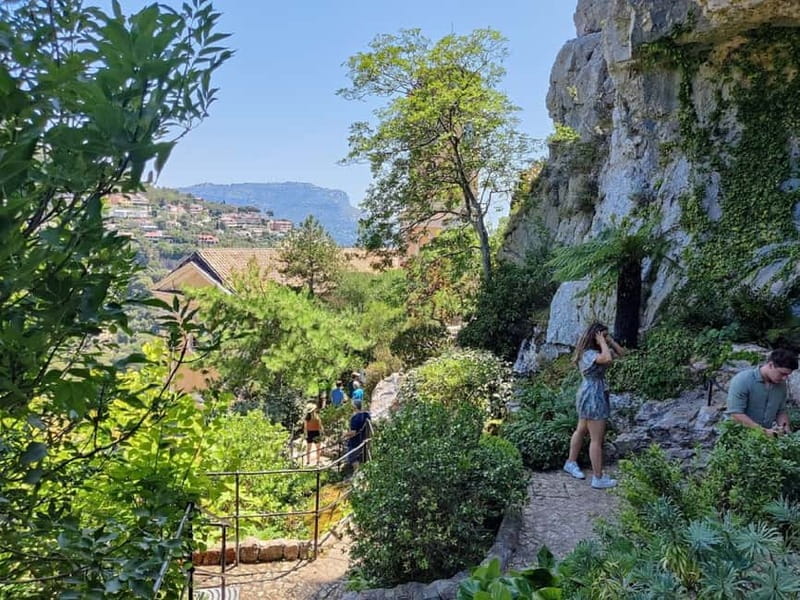
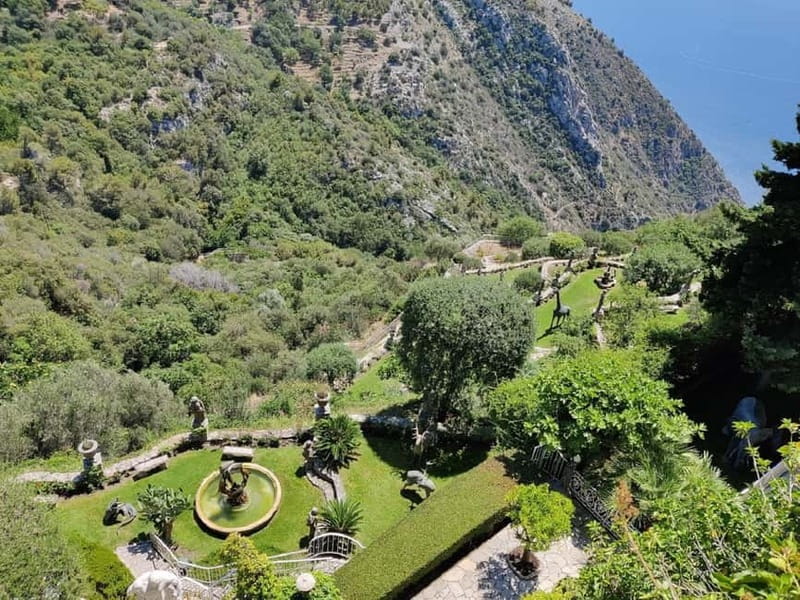
The Exotic Garden is the star for most people, and it deserves the hype—because the experience is built for both plants and views. You’ll visit Le Jardin Exotique, and the garden is described as having more than 100 species of succulent plants and cacti. You’ll also see stone female sculptures, which add an art-and-landscaping contrast you don’t expect from a place marketed as botanical.
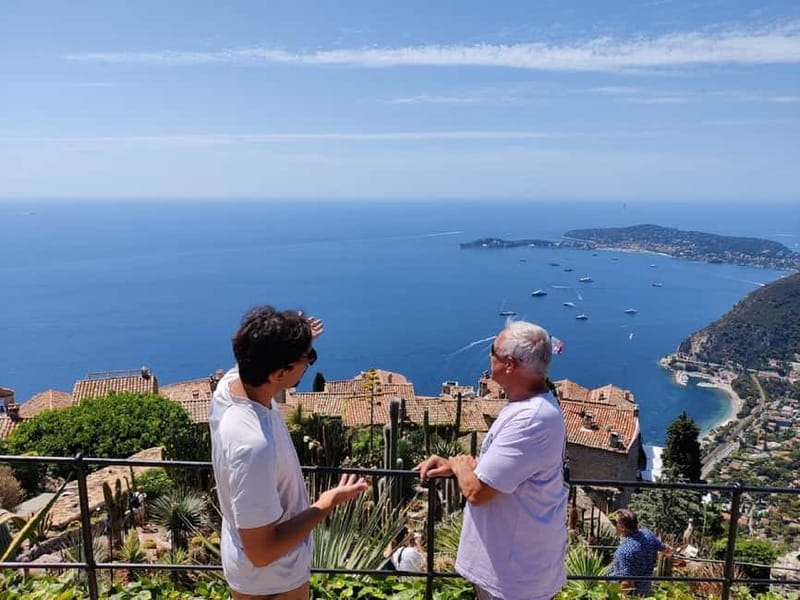
The best part is what happens once you climb to the top. The garden viewpoint gives you stunning panorama views of the village along with the sea and the mountains. It’s the type of view that makes you stop talking and just look.
One smart value note: garden entry is included, and that can save time and effort. In particular, included tickets helped bypass a long line on at least one past tour experience. Even if you don’t hit a crush crowd, you’ll feel the benefit of arriving with a plan instead of figuring it out on the spot.
If you want great photos, bring your patience. People tend to gather at the viewpoints, and you’ll want a quick moment where the angle looks right rather than taking the first shot you see.
Fragonard factory stop: perfumes and soaps with a quick behind-the-scenes taste
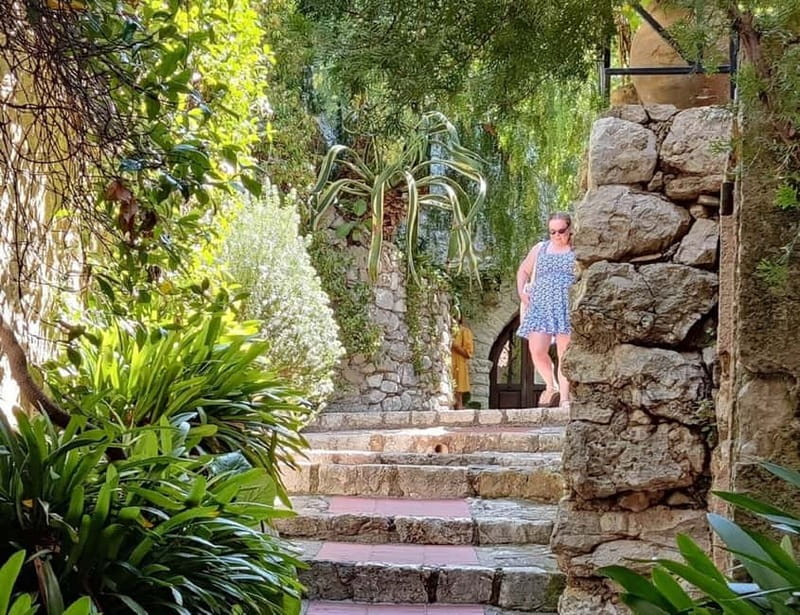
Between the medieval stops and the garden, there’s also time for a Fragonard factory stop. This is your break from the stone-and-steps rhythm, and it’s tied to a brand many people recognize.
You can discover the secrets of making perfumes, soaps, and cosmetics from this renowned house. And yes, there’s an adjoining store where you can shop.
If you’re the type who enjoys sensory travel—smells, textures, small demonstrations—this stop lands well. If shopping isn’t your thing, you can still enjoy the learning piece as a different side of the region’s culture.
How the small group format actually helps your day
This tour is limited to 10 participants, which is a big deal in a place where space is tight. When groups are larger, you spend time negotiating corners and waiting for people to catch up. Here, your guide can manage pacing and crowds more effectively, so your walking feels smooth rather than chaotic.
It also means Q&A is realistic. When the group stays small, you can ask follow-up questions about what you’re seeing—history, local culture, or why certain buildings and features ended up where they did.
A bilingual experience (English and French) also matters for comfort. You’ll get the same flow in either language, without feeling like you’re missing context.
Timing and endurance: 1.5 hours that still feel like something
The tour runs about 1.5 hours, which is a sweet spot for Èze. Long enough to cover the core medieval highlights plus the Exotic Garden, but short enough that you’re not trapped in a full-day ordeal.
Still, take the stairs seriously. You should expect plenty of steps, and you can’t treat this as a stroll. If you’re managing a knee issue, breathing limits, or fatigue, plan your day around this tour rather than squeezing it between other steep walks.
Also remember it’s rain or shine. If the forecast looks wet, pack a light rain layer and consider grippy shoes. Stone can get slippery, and Èze doesn’t offer wide sidewalks to spread out.
Value for $34: why the price feels fair for what you get
At $34 per person, you’re paying for more than a walk. You’re paying for a certified local guide, time-saving garden entry, and a route that connects multiple high-value stops in one compact window.
Here’s what makes that number feel reasonable:
- Garden entry is included, so you don’t have to add another ticket at the last minute.
- A local guide turns random sights into meaning, especially at the gate, ruins, chapels, and church.
- The small group size helps you keep your pace and avoid the worst crowd friction.
- A guide’s crowd management matters most at the garden and church areas, where bottlenecks can happen.
If you’re visiting Èze for the first time and you want the highlights without playing navigation games, this is the sort of setup that tends to feel like good value.
If you already know Èze well and plan to wander slowly on your own, you might skip a guide. But if you want the garden view plus context, the guide is doing real work.
Should you book this Èze walking tour?
Book it if you want:
- A guided approach to the medieval village so you understand what you’re seeing.
- The Exotic Garden with less hassle and better pacing.
- A route that includes key religious landmarks and a short brand stop at Fragonard.
- A small group experience that makes questions and crowd navigation easier.
Consider skipping (or choosing a different style) if:
- Stairs are a deal-breaker for you. This tour includes many steps and isn’t suitable for wheelchair users.
- You prefer lots of free time to wander without a set pace. This is structured for highlights.
For most people visiting Èze, this is a smart way to do Èze in a short time while still feeling like you got the full character of the village.
FAQ
How long is the Èze walking tour?
The tour lasts about 1.5 hours.
Where do I meet the guide?
You meet at Place du Centenaire, which is described as the only entrance to the village of Èze. Look for someone with a grey backpack with an Esplouratour sign.
What does the tour include?
It includes a walking tour, a certified local guide, and entry to the Exotic Gardens.
Is the tour rain or shine?
Yes, it runs rain or shine.
What languages are available?
The live tour guide is available in English and French.
Is this tour wheelchair accessible?
No. It is not suitable for wheelchair users, and the tour involves many stairs.
If you want, tell me what day/time you’re visiting and whether you’ll be coming from Nice or elsewhere, and I’ll suggest a simple plan for the rest of your Èze time around this tour.