REVIEW · PERFUME WORKSHOPS & GRASSE TOURS
Molinard Classic Perfume Workshop in Nice
Book on Viator →Operated by Molinard Parfums GLB SAS · Bookable on Viator
That first sniff of possibilities is pure vacation fun. This hands-on Molinard Classic Perfume Workshop in Nice turns a walk around town into a scent-making lesson, with expert guidance and a take-home souvenir. You’ll learn the difference between eau de parfum, eau de cologne, eau de toilette, and eau fraiche, then translate that knowledge into something you actually like.
Two things I’d prioritize if I were picking this activity: the custom blending part (you choose from 90 options of fragrances, bases, and essential oils) and the fact you leave with a full 50 ml vial in a spray format, plus the documentation to reorder later. One thing to keep in mind: the class is tightly timed at about an hour, so if you’re indecisive, you’ll want to think ahead about the style you want to build (fresh, floral, woody, smoky, etc.).
In This Review
- Molinard Classic Perfume Workshop: Key Reasons It Works
- Entering Molinard’s Boutique Workshop in Central Nice
- The Mini Museum and the Quick French Perfume Lesson
- Choosing Notes Like a Perfumery Chemist
- Your Signature Blend: The Actual Mixing and Bottling
- The Instructor Makes or Breaks It (And This One Delivers)
- Leaving With a Reorder Code and a Real Souvenir
- Price and Value in a City Full of Nice Things
- Best Time to Go and How to Fit It Into Your Nice Day
- Who This Workshop Is For (And Who Might Skip It)
- Should You Book Molinard’s Classic Perfume Workshop in Nice?
- FAQ
- How long is the Molinard Classic Perfume Workshop in Nice?
- What is included in the workshop price?
- Is food or drinks included?
- Is the workshop offered in English?
- How big are the groups?
- Can I bring a service animal?
- Is there a refund if I cancel?
Molinard Classic Perfume Workshop: Key Reasons It Works
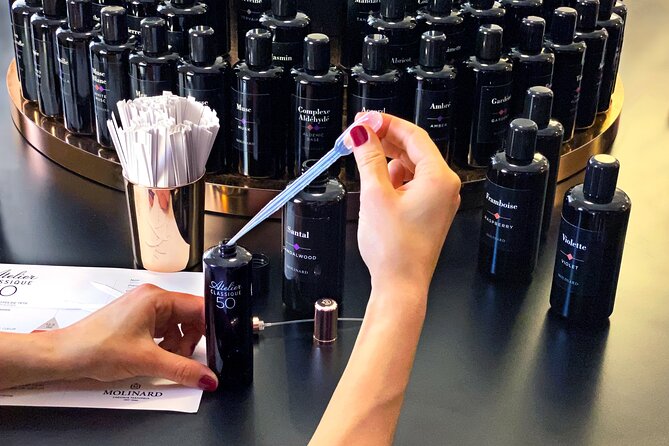
- 90 blend options: fragrances, bases, and essential oils to mix into your signature scent
- A hands-on, guided process: you build top, middle, and base notes with step-by-step help
- You learn the perfume language first: eau de parfum vs eau de toilette vs cologne and more
- Take-home 50 ml spray vial: a real, generous souvenir, not a tiny dab
- Mini Museum access: extra context on Molinard’s Riviera perfume story since 1849
- Reorder code in the diploma: keep your reference so you can buy your blend again
Entering Molinard’s Boutique Workshop in Central Nice
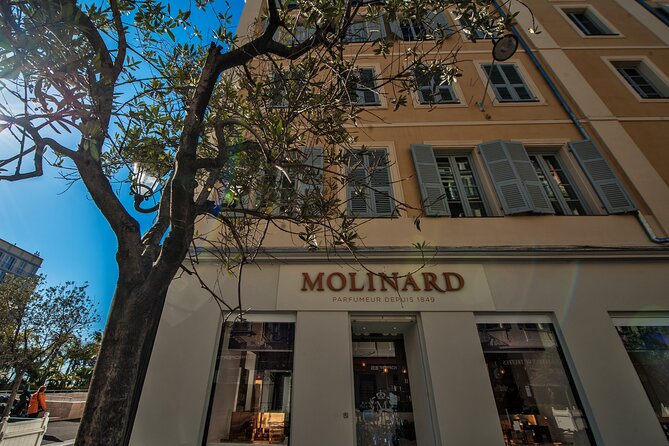
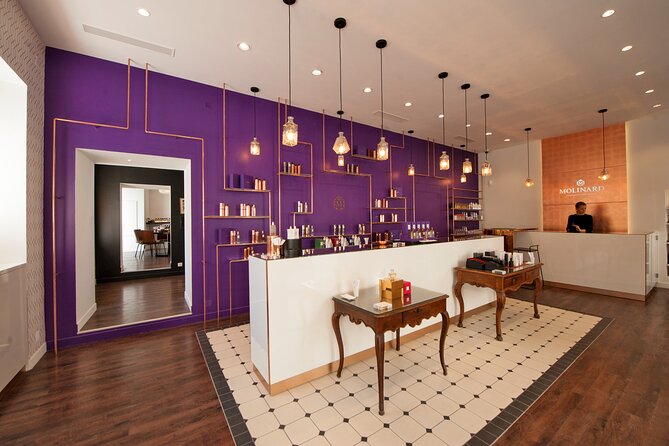
This workshop is built for people who like learning with their hands. You start at the Molinard boutique on Rue Saint-François de Paule, right in the center of town, and you’ll have what you need to get started during open shop hours. Expect it to be easy to reach thanks to being near public transportation, and the setting is set up for a guided class rather than a passive talk.
Also, the format is practical. You’re not herded into a huge crowd. The group size tops out at 20 travelers, which means you get the kind of personal attention that matters when you’re choosing scents that can smell totally different on skin than they do in a bottle.
The experience runs for about one hour, and you can usually pick a morning or afternoon slot. That’s a real advantage in Nice, where your best day plans often depend on weather and how you feel about walking. You’ll also see that this is offered in English, with confirmation sent at booking.
You can also read our reviews of more tours and experiences in Nice

The Mini Museum and the Quick French Perfume Lesson
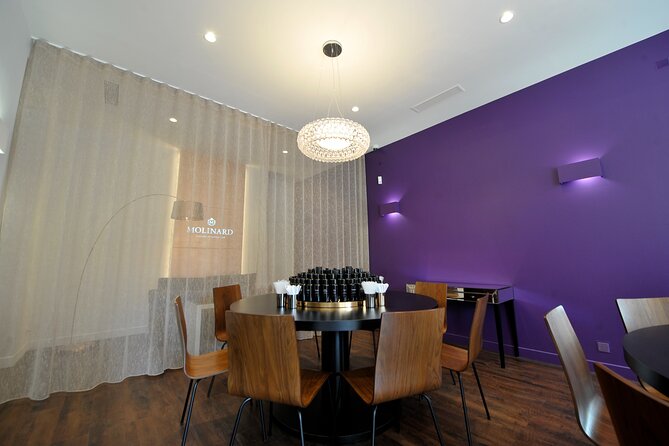
Before you start mixing, you get a short but useful foundation in how French fragrance is talked about. You learn the difference between eau de parfum, eau de cologne, eau de toilette, and eau fraiche. Even if you’ve been buying perfume for years, these terms can feel vague. Here, you get a clearer sense of what each label usually implies in the perfume world.
You’ll also explore the kinds of ingredients commonly used in top-shelf scents, and how those ingredient families relate to what you smell. In plain terms: you’re training your nose to notice the structure behind the pleasant smell.
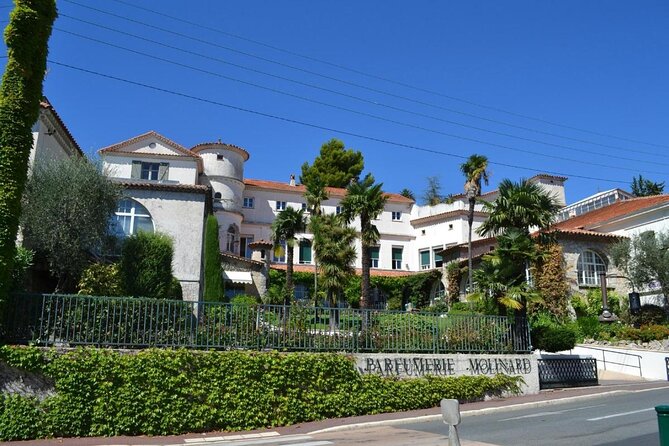
Then comes the Mini Museum (included). This is where the experience connects back to the brand itself—Molinard has been making fragrances on the French Riviera since 1849. You don’t need to be a perfume historian to enjoy this part. Think of it as a quick “why this place matters” add-on that makes the workshop feel anchored in the real craft of the region.
If you care about context without sitting through a long lecture, this is the right amount.
Choosing Notes Like a Perfumery Chemist
Now you get to the fun part: building your own scent. The workshop works with a classic structure of fragrance layers: top, middle, and base notes. This is what turns a perfume from a single smell into something that changes over time.
You’ll have a large selection to work with—90 different fragrances, bases, and essential oils—and your instructor helps you turn preferences into an actual recipe. One detail that shows how hands-on this is: the process has you selecting specific note types (many classes use a plan like bottom/base, middle, and top choices), and then the mentor adjusts proportions with you.
In other words, you’re not just dumping scents into a bowl and hoping for the best. You’re making choices, then using guidance to make those choices hold together.
From what you’re shown during class, this is also why the workshop feels like a small lab moment. You work through scent categories in a way that mirrors how real perfumers think.
Your Signature Blend: The Actual Mixing and Bottling
Once you’ve chosen the note directions that match your taste, you move into blending and measuring. The experience culminates in filling a bottle for your take-home perfume.
Here’s what’s great for value and realism: you’re creating a 50 ml (1.75-fl oz) vial of eau de parfum to take home. That’s a proper size. You’re not leaving with something too small to use, and you’re getting a product that feels like a real purchase—even if it’s custom.
You’ll use the workshop’s equipment and materials, and your mentor will adjust quantities in liaison with you. Then you’ll fill your spray bottle using tools like disposable pipettes, which keeps things tidy and repeatable for each participant.
This part is also where the experience becomes memorable in a practical way. If you’ve ever wondered why one perfume smells “right” for you, this gives you the first clue: your favorites usually have a shape, not just a scent. When you build that shape yourself, you start to understand what you actually like—freshness, warmth, woodiness, smoke-like depth, sweetness, and so on.
And yes, different people end up with very different perfumes. That’s part of the joy. You’re sitting in a room with a bunch of scent preferences, and you’re all producing outcomes that make sense for your own nose.
The Instructor Makes or Breaks It (And This One Delivers)
A workshop like this rises or falls on guidance, and the staff here clearly knows how to teach. One instructor name that stands out in the experience you’ll encounter is Florence. The style of instruction described is hands-on and supportive, with help when you’re choosing proportions or trying to steer your scent toward what you have in mind.
The best part is the tone: it’s not a snooty perfume lecture. It’s more like a patient mentor helping you translate smell into mix decisions. People also mention the class feels well organized and paced, and that it runs close to the expected 60 minutes, which matters because you’ll want to get on with the rest of your day in Nice afterward.
If you’re bringing teens or kids, this format usually works because it’s concrete. You’re making something, smelling constantly, and learning in short, clear steps—not memorizing fragrance theory all afternoon.




Leaving With a Reorder Code and a Real Souvenir
This isn’t just a fun activity that ends when the bottle is capped. You get a diploma and a way to recreate your scent later.
After you make your perfume, you receive a certificate with a reference number. If you ever want more of your exact blend, you can use a special code on the diploma to order additional bottles. That’s a big deal if you’re traveling and you still want your vacation scent to follow you home.
You also take home a spray bottle of your eau de parfum 50 ml, which means you’ll actually wear or gift it. It’s the kind of souvenir that feels personal, not decorative.
And for gift shoppers, it’s a relief. If you’ve ever struggled to find something small and meaningful, a custom perfume in a recognizable French brand is hard to beat.
Price and Value in a City Full of Nice Things
At $107.68 per person for about one hour, the price might look steep at first glance—until you compare it to what you’d pay for a bottle that size in a store, plus the fact you’re getting the ingredient education, blending help, and documentation.
What makes it good value is not just the perfume bottle. It’s the total package:
- expert-led instruction,
- all materials included,
- the take-home 50 ml vial,
- and the mini museum add-on.
In a tourist city, this kind of experience is often priced for the labor and ingredients. Here, you can feel that you’re paying for a small-group workshop with real outcomes, not just a demo.
Also, it’s booked fairly in advance—on average about 17 days ahead. If you want a specific time slot, I’d treat this like a real plan, not a last-minute idea.
Best Time to Go and How to Fit It Into Your Nice Day
Your best bet is to schedule the workshop when you’re not trying to squeeze in one more museum. It’s intense in smell terms, and it’s most enjoyable when you’ve got time afterward to keep wandering.
Because there are morning or afternoon choices, you can match it to your day rhythm:
- If mornings are your strong suit, do it early and let the scent-making set the tone for the rest of Old Nice.
- If you prefer a late start, go afternoon and treat it like your hands-on break from walking and browsing.
One bonus: the smaller group feel can make the experience feel more personal in quieter periods. If your trip lines up with a less crowded season, you may find you get even more individual help when choosing notes.
Who This Workshop Is For (And Who Might Skip It)
This is a great fit if you:
- love perfume or want to understand it beyond marketing labels,
- want a hands-on activity that feels like a real craft,
- want a souvenir you’ll actually use (50 ml is substantial),
- are traveling with friends or family and want a shared activity with personalized results.
It’s also friendly for groups that include teens, based on how the class is described as guided and supportive.
You might consider skipping it if you’re:
- short on time and hate structured activities,
- not interested in scents at all (this is not a general “culture of fragrance” talk with no mixing),
- or worried about decision-making. There are many options, and the class still expects you to make choices fast enough to finish within the hour.
Should You Book Molinard’s Classic Perfume Workshop in Nice?
Book it if you want a memorable Nice experience with a practical payoff: you learn how French fragrance terms work, you build a real scent with guidance, and you go home with a 50 ml bottle that you can reorder later using your diploma code.
Skip it only if perfume isn’t your thing or if you really need free-form, no-structure time. Otherwise, this is one of those rare tours where the end product is the whole point. You leave smelling like your own idea of the French Riviera.
If you’re choosing between doing yet another stop with photos and doing something you can replay at home, this one wins.
FAQ
How long is the Molinard Classic Perfume Workshop in Nice?
It lasts about 1 hour.
What is included in the workshop price?
Your ticket includes the instructor, all equipment and materials, a 50 ml vial of eau de parfum to take home, a diploma, and access to the Mini Museum.
Is food or drinks included?
No, food and drinks are not included.
Is the workshop offered in English?
Yes. The workshop is offered in English.
How big are the groups?
The activity has a maximum of 20 travelers.
Can I bring a service animal?
Yes. Service animals are allowed.
Is there a refund if I cancel?
No. This experience is non-refundable and cannot be changed for any reason. If you cancel or request an amendment, the amount you paid is not refunded.