Bellet wine sits right next to Nice, so this tour feels like a shortcut to real Provence. You’ll spend about 4 hours with an English-speaking guide in a small group, sampling organic pours and local bites while learning what makes Bellet special. Two things I’d happily do again are the paired tastings at Chateau de Cremat and the family-run Domaine de la Source experience, plus the way the guide ties it to terroir and local wine classifications. The main consideration: it’s a half-day, so time at each winery is limited, and one stop may not feel as generous with tastings as the other.
If you like your wine education practical, this one works. I like that it doesn’t just pour and leave: you get guided context on how the vineyards, soils, and Bellet styles connect, and you’ll also get a food tasting component, not only wine. The other plus is the comfortable air-conditioned ride and the small-group feel, which makes it easier to ask questions and actually keep up with the story.
Possible drawback to plan around: tastings are part of the schedule, so it’s not a good match if you’re traveling with kids, and you’ll want to keep dinner timing in mind since you return right back to the meeting point.
In This Review
- Key takeaways before you go
- Bellet wine: a Provence detour that stays close to Nice
- Meeting on the Promenade: how the timing really feels
- Chateau de Cremat: gardens, cellar time, and a tasting that sets the tone
- Domaine de la Source and Vin de Bellet: family-run character and organic focus
- Scenic pauses: Nice’s blue seats plus vineyard viewpoints
- How the tasting teaches you French wine (without making it a classroom)
- Comfort, group size, and what makes the ride work
- Price check: what $191.88 gets you, and when it’s a good deal
- Who this tour is best for
- Should you book this Bellet organic wine tour?
- FAQ
- How long is the Provençe Organic Wine small group tour from Nice?
- Where does the tour start, and what time does it begin?
- What’s included in the tour price?
- Do I have to pay separately for the winery visits?
- Is the tour in English?
- How many people are in the group?
- Is it suitable for children?
- Are service animals allowed?
- What happens if the tour is canceled due to weather or not enough passengers?
- What’s the cancellation policy if I change my plans?
Key takeaways before you go
- Bellet Hill wine, right from Nice: you’re tasting in the hills west of town, not doing a long countryside detour
- Two organic wineries: Chateau de Cremat first, then Domaine de la Source for a different size and style of operation
- Wine plus food pairings: local snacks show up at the tastings, and the first stop is often the most generous
- Small group size: up to about 14–15 people, so you get more attention than on big bus tours
- Scenic pauses around Nice: including the famous blue seats waterfront photo stop
- Transport included: pickup and drop-off are handled back at the start point on the Promenade des Anglais
Bellet wine: a Provence detour that stays close to Nice
Most wine tours from the Côte d’Azur feel like logistics first, wine second. This one flips that a bit because Bellet sits close enough that you’re still in Nice’s orbit while the hills start to take over. Expect the vibe to be hillside and Mediterranean rather than classic “fields for miles” Provence.
Bellet is also a great place to learn the wine basics that actually matter. The tour’s focus on terroir and wine classifications makes sense here because Bellet’s identity is tied to location, slopes, and traditional grapes/styles. If you’ve ever wondered why two wines can taste different even when they sound similar, that’s the kind of question this route helps you answer.
And if you’re pairing wine with scenery, you’ll like the way the tour breaks up time with views over Nice. It’s not a full-on sightseeing day, but you still get enough outside moments to feel like you escaped the city for a few hours.
Meeting on the Promenade: how the timing really feels
You start at 5 Prom. des Anglais, 06000 Nice and the tour begins at 1:30 pm. With an approximate 4-hour total run time, it’s designed to work when you want to do Nice in the morning and still be back for dinner.
This is one of those schedules that makes planning easier if you like structure. You’ll have transport handled, you won’t be stuck figuring out roads to vineyard areas, and the visit rhythm (first winery, second winery, then scenic stops) keeps things moving without turning into a sprint.
The half-day format also nudges you to drink responsibly. Because tastings are included, bring a mindset like aperitif rather than party night, and plan a proper meal afterward.
Chateau de Cremat: gardens, cellar time, and a tasting that sets the tone
Chateau de Cremat is the first stop, and it comes with an estate feel: large gardens, grape fields, and time in the cellar area. This matters because it’s not only a tasting room stop. You’re getting the setting first, which makes the wine story easier to follow once you sit down with your glass.
From what’s been described, the tasting experience here tends to be the standout for many people: more generous pours and a broader spread that often includes both wine and food elements. One common pattern is that the first winery leans into hospitality, with local bites showing up alongside the wine so you can taste without your palate feeling overwhelmed.
There’s also a practical advantage to starting here. Even if you’re new to French wine terms, the guide has a chance to explain the basics early, then you apply that right away to what you taste. If you’re the type who learns better by doing, this pacing helps.
One note to keep your expectations realistic: a few comments mention that this stop can feel a bit rushed compared to how relaxed the overall tour feels at the beginning. That likely comes down to how long the group stays, and how much time people spend during the tastings and walking portions.
Domaine de la Source and Vin de Bellet: family-run character and organic focus
The second winery is Domaine de la Source / Vin de Bellet, and it’s a different kind of experience from the first stop. This one is family-run, with a strong emphasis on organic production and the working side of vineyards and winemaking. You’ll get a look at things like the greenhouse area and cellar, which helps you connect the final wine in your glass to the process that made it.
This is also where you may notice the tour’s “compare and contrast” approach. Some people find the smaller family operation more charming and more personal, and others still enjoy the variety and history of the bigger estate stops. The goal isn’t to rank wineries as better or worse; it’s to show different methods and different personalities of production within the Bellet context.
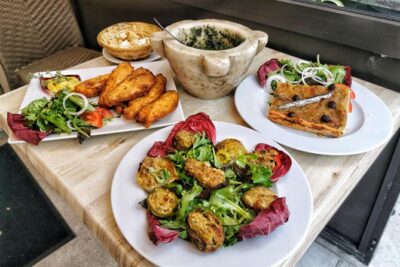
Food pairing shows up here too. In past experiences on this route, local bites at the first stop have been highlighted, and the second stop often still delivers, even if the tasting portion is smaller. One memorable detail: the pairing can include things like ratatouille and anchovies tart, which is a fun match for the kinds of red and rosé styles Bellet is known for.
If you care about buying wine, keep an eye out for options like shipping. At least one participant reported being able to order wines to be shipped back to California, which can be a big win if you don’t want to carry bottles home through the rest of your trip.
Scenic pauses: Nice’s blue seats plus vineyard viewpoints
Between the two winery moments, you’ll also get breaks that help the day feel like Nice, not just wine. There’s a stop at the waterfront in Nice for the famous blue seats view. If you’ve seen photos of them, this is the straightforward chance to see them in real life.
You’ll also get time for Bellet hill scenery: one stop description points to a larger, elegant setting with an old chapel and flat vineyard fields, and another refers to a mid-size winery on the west plateau known for rosé production. The wording suggests these are more about sightlines and photo moments than ticketed visits, so don’t plan to treat them like a second full winery tour.
Still, these pauses do real work. They break up the tasting schedule, give you a chance to look out over the region, and help you understand why the wines taste the way they do. When you can see the slope and the light angle, the terroir story makes more sense immediately.
How the tasting teaches you French wine (without making it a classroom)
The guide’s job on this tour is part storytelling, part translation of wine language into something you can taste. You’ll learn about terroir and wine classifications while sampling organic wines. That sounds formal, but the practical side is simple: you’ll make connections between what the guide explains and what you notice in the glass.
Here’s what to watch for during your tasting:
- Look for how the guide sets expectations by vineyard and soil/slope clues, then pay attention to how those notes show up in aroma and taste
- Compare styles from each stop, especially if you get a spread that includes red, rosé, and white
- Use the food to test your assumptions, since salty or savory bites can change how you perceive sweetness, acidity, and tannin
In one set of experiences on this route, people described tasting about six wines across the two vineyards, including red, rosé, and white options from each. Even if your exact pour list varies day to day, the overall idea stays the same: you get enough range to notice differences, not just a single signature style.
Also, don’t underestimate the role of pacing. If you drink slowly and take bites between tastings, the tasting education sticks better and you’ll remember your favorites for weeks.
Comfort, group size, and what makes the ride work
This is marketed as a small group tour with a maximum of 14 people per booking and a stated maximum of about 15 travelers. In practice, that size matters because you can hear the guide, you aren’t stuck staring at the back of someone’s head, and you’re more likely to get personal questions answered.
Transport is handled in an air-conditioned vehicle, and the route involves narrow roads and vineyard access roads. One practical point that came up in past experiences: the guide checked for car sickness concerns, which is smart here. If you’re sensitive, it’s worth planning ahead—bring water, sit where you get the smoothest view, and consider how you usually handle curvy roads.
Guides on this route have been described by name in past experiences, including Marie, Michael, and at least one driver/guide referenced as Koko/Coco (spelling uncertain). No matter who you get, the goal is the same: keep everyone engaged, explain what you’re seeing, and keep the day moving at a human pace.
If you’re near public transportation, that’s a plus for getting to the meeting point on your own schedule. Also, the tour uses a mobile ticket, which saves you from last-minute paper searching.
Price check: what $191.88 gets you, and when it’s a good deal
At $191.88 per person, you’re not paying for a cheap pour-and-run. You’re paying for three value pieces that add up:
- Transport round-trip from Nice (so you’re not hiring a private driver or renting a car)
- Tastings plus food tasting at two wineries (not just water-and-a-glass pricing)
- Professional guiding focused on both wine and place, in a small group
Is it worth it? For the right traveler, yes—especially if you want an afternoon that’s genuinely different from standard city sightseeing. One reason it works is the close-to-town location. You’re getting vineyard experiences without sacrificing a whole day to driving.
The only “value wobble” to consider is tasting generosity. Some descriptions highlight that the first winery can offer a more generous tasting experience than the second. That doesn’t automatically make the tour bad, but it does mean you should go with the mindset of enjoying the pairings across both stops rather than expecting identical amounts at each location.
If you’re comparing against other tours, do it on what’s included: here you have wine + food, guide time, and round-trip transport. That bundled approach is often where the real savings show up compared with doing vineyard visits plus separate tastings on your own.
Who this tour is best for
This works best if you:
- Want a half-day wine experience that leaves room for Nice afterward
- Prefer a small group rather than a large bus crowd
- Like learning wine basics tied to place, not just tasting random sips
- Are open to tasting across red, rosé, and white styles
It may not be your best match if:
- You’re traveling with children, since it’s not recommended for a child due to wine tasting
- You want a long, slow winery immersion with lots of free time. This is a structured afternoon, not an all-day wandering day
If you’re celebrating something or traveling as a couple, this schedule is also convenient. You get a planned experience without committing to a full day tour.
Should you book this Bellet organic wine tour?
I’d book it if you’re the kind of person who wants one memorable “outside Nice” experience that’s still easy. The combination of Bellet Hill wineries, wine and food tastings, and small-group guiding makes it a strong value use of an afternoon—especially since you’re not spending half the day getting there.
Pass if you’re expecting a slow, ultra-luxury pace, or if you’re very sensitive to motion on curvy roads. Also, if you know you’ll be disappointed by shorter tasting time at one stop, consider that the format is designed for comparison across two different wineries, not for maximum time at a single estate.
If you want an afternoon that feels like you’re tasting Provence but staying close to the sea, this Bellet organic tour is a solid pick.
FAQ
How long is the Provençe Organic Wine small group tour from Nice?
It runs for about 4 hours.
Where does the tour start, and what time does it begin?
The meeting point is 5 Prom. des Anglais, 06000 Nice, France, and the start time is 1:30 pm.
What’s included in the tour price?
The tour includes wine tasting, food tasting, a professional guide, and round-trip transport in an air-conditioned vehicle.
Do I have to pay separately for the winery visits?
Admission tickets are included for the two listed winery stops.
Is the tour in English?
Yes, the tour is offered in English.
How many people are in the group?
The tour has a maximum of 14 people per booking (with a stated maximum of 15 travelers).
Is it suitable for children?
It is not recommended for children due to wine tasting.
Are service animals allowed?
Yes, service animals are allowed. Animal service on request is mentioned for a little animal only.
What happens if the tour is canceled due to weather or not enough passengers?
The experience requires good weather. If canceled due to poor weather, you’ll be offered a different date or a full refund. If the minimum number of travelers isn’t met, you’ll be offered an alternative or a full refund.
What’s the cancellation policy if I change my plans?
This experience is non-refundable and cannot be changed; if you cancel, the amount paid is not refunded.